
Confirm you're insured before you touch the wheel
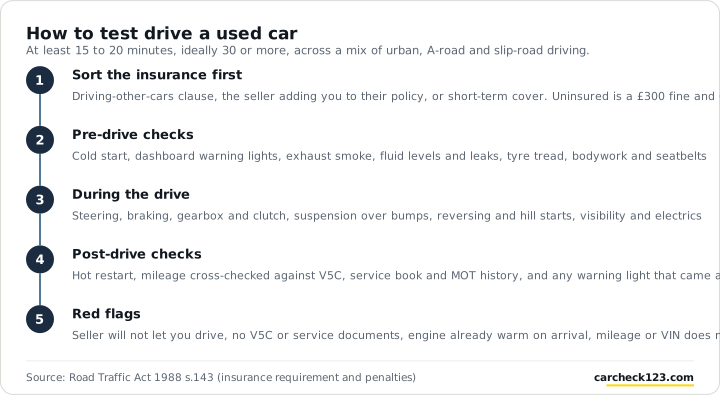
Part of our guide to buying a used car. A good test drive follows an order. First, confirm you're actually insured to drive the car. Then check the car with the engine still off.
After that, drive for at least 15-20 minutes across a mix of roads. Check the car over again once the engine is hot. Each stage below tells you what to look for, listen for and feel. Most guides are vague or slightly wrong on insurance, so it comes first.
A pre-viewing checklist of questions to ask covers what to sort out before you book the viewing at all. This piece is about what to physically do when you're standing next to the car.
For the full walk-through, see how to buy a used car in the UK.
Before you even get in: are you insured to drive this car?
This is the one thing that can end a test drive before it starts. So check your cover before you go anywhere near the keys. UK law requires at least third-party insurance to drive on a public road. Under the Road Traffic Act 1988 s.143, that applies to test-driving someone else's car just as much as your own.
Drive without it and you risk a £300 fine and 6 penalty points on the fixed-penalty route. It can mean an unlimited fine and possible disqualification if it goes to court, and the vehicle can be seized on the spot.
There are three realistic routes for a private-sale test drive:
- A Driving Other Cars (DOC) clause on your own policy. Where it exists at all, it's usually third-party cover only, so it won't cover damage to the car you're driving. Admiral says it used to come as standard on most comprehensive policies and no longer does. Don't assume you have it. Check your certificate of motor insurance.
- The seller adding you to their own policy temporarily. That's possible in principle, but it isn't standard practice, and it isn't something to assume will be offered or will actually cover you properly.
- Short-term test-drive insurance, bought directly by you for an hour or a day from a specialist provider. It's the practical default most buyers end up using, and you can buy it online in minutes.
Whichever route you take, bring your licence. A seller, or their insurer if needed, will reasonably want to see it.
What a DOC clause actually asks of you
The conditions live in the policy booklet, not on the insurer's FAQ page. The two don't always agree, and only one of them is the contract.
Aviva's current car booklet shows the shape of them. Cover runs to the policyholder only, so a named driver gets nothing from it. You have to be aged 25 or above at the start of the policy or at renewal. Turning 25 halfway through doesn't switch it on.
Admiral's booklet words its eight conditions differently, and two bite on a private sale. The seller's car has to have valid insurance of its own. A car that's sat unsold, or been declared SORN (officially off the road), may not. And your own car needs valid road tax, plus a valid MOT if it's old enough to need one.
The two booklets part company on age, and Admiral parts company with itself. Its guide to driving other cars says you must be over 25. Its policy booklet lists eight conditions and an age limit isn't one of them.
Your own certificate or schedule could still carry one the booklet doesn't print. So ask your insurer to confirm where you stand, in writing.
All three routes above assume the car still isn't yours. Buy it and the first two close, because a DOC clause only works on a car you don't own. Our guide to insuring a car you've just bought picks the story up from there.
Quick checks before you book the viewing at all
Before you arrange to view a specific car, run its registration through our free car check. It takes seconds. You'll see the current MOT and tax status, so you're not wasting a trip on a car with a problem the seller didn't mention.
A dedicated pre-viewing checklist of questions to ask covers this stage in full.
Pre-drive checks (before the engine's even running)
- Cold-start behaviour. Ask to start the car from cold if you can. A car that's suspiciously warm when you arrive is worth asking about. Listen for anything rough or hesitant on start-up.
- Dashboard warning lights. Note any light that shouldn't be on, and ask about it.
- Exhaust smoke. Blue smoke suggests oil burning. Thick white smoke, beyond a cold-morning puff of condensation, suggests a coolant problem.
- Fluid levels and leaks, under the bonnet and on the ground where the car's been parked.
- Tyre tread. The UK legal minimum is 1.6mm across the central three-quarters of the tread, checked all the way round. Some guides quote 3mm as if that were the legal figure. It isn't. 3mm is a safety-recommended replacement point, not the law.
- Bodywork and panel gaps, plus seatbelts working properly on every seat.
What to check during the drive
How long should a test drive be?
At least 15-20 minutes. Ideally 30 or more. Try slower urban streets, a faster A-road stretch and a motorway slip road if you can.
No law sets a minimum length for a test drive. It's simply practical because a five-minute drive round the block won't show most of what matters.
- Steering, braking, gearbox and clutch. Watch for pulling to one side under braking, notchy or hesitant gear changes, and a clutch biting unusually high or low.
- Suspension and noise over bumps. Listen for knocks and clonks, and feel for excessive float over uneven surfaces.
- Reversing and hill starts, if you can find a slope. Rolling back or an unexpectedly grabby clutch are both worth knowing about.
- Visibility and mirrors, plus whether the aircon and the other electrics work as you'd expect.
Post-drive checks
- Hot restart. Turn the engine off and start it again when it's warmed up. Some faults only show up on a hot start, not a cold one.
- Compare the mileage with the V5C, the service book and any MOT history you can see on the spot.
- Ask directly about any warning light that came on and then went off during the drive. Don't let it slide just because it's no longer lit.
Red flags that should end the test drive (or the sale) early
- The seller is reluctant to let you drive the car at all, or insists on driving it themselves throughout.
- No V5C or service documents available to look at.
- The engine's clearly already warm when you arrive, with no reasonable explanation.
- The mileage or VIN doesn't match what you were told, or what a check has shown.
Any one of these is a reason to slow down and ask hard questions. One alone needn't be a dealbreaker. More than one together, though, and I'd think twice about the car.
After a good test drive — what next
If the drive's gone well, the next step is checking what a test drive can't tell you. Our Comprehensive check confirms mileage consistency, outstanding finance, write-off history and stolen status. This sample report shows what's covered.
Use anything the test drive or the check turns up at the negotiating table. Our guide to used-car price negotiation shows you how. If the odometer reading gave you pause, our guide on what mileage is too high for a used car is worth reading too.
FAQs
How long should a test drive be?
At least 15-20 minutes, and ideally 30 or more. Cover a mix of urban roads, a faster A-road and a motorway slip road if you can. This is a practical convention rather than a legal rule. But a five-minute loop round the block won't tell you much.
Do I need my own insurance to test drive a used car?
You need to be covered by insurance in some form. Driving with no cover at all is illegal under the Road Traffic Act 1988, whoever owns the car. There are three realistic routes. A Driving Other Cars clause on your own policy, which you should check rather than assume. The seller adding you temporarily, which is uncommon. Or short-term test-drive insurance you buy yourself.
Does my comprehensive car insurance cover me to test drive someone else's car?
Not necessarily. Driving Other Cars cover is usually third-party only, where it exists at all. Admiral says it's no longer standard on comprehensive policies. It carries conditions too. Aviva's booklet only covers policyholders aged 25 or above. That's tested when the policy starts or renews. So check your certificate of motor insurance. Don't assume your comprehensive cover extends to another car.
Can the seller let me test drive the car on their insurance?
In principle, yes. But it isn't standard practice, and you shouldn't assume it. Confirm it directly with the seller. Make sure it covers you before you rely on it.
What's the fastest way to get insured for a one-off test drive?
Short-term test-drive insurance from a specialist provider, bought online in minutes and covering an hour or a day. It's the practical default most buyers use, rather than relying on a policy clause that may not exist.
What should I do if the seller won't let me test drive the car alone?
It's entirely normal for a seller to come along, especially in a private sale, and that on its own isn't a red flag. Be cautious if a seller won't let you drive the car at all.