
What is mileage clocking, and why does it happen?
A car's value drops as the miles climb. Knock the reading down and the asking price can rise by hundreds or thousands of pounds, which explains why people do it.
It can happen anywhere in the chain. Sometimes a private seller, sometimes a back-street trader, sometimes someone further up who bought at auction and "corrected" the figure before selling it on.
The method's changed. Older cars had mechanical dials, wound back by hand. Modern cars store the mileage electronically. A tool plugged into the diagnostic port rewrites the figure held in the instrument cluster.
The effect is the same either way. The electronic version often leaves no visible sign on the dashboard. So you can't trust the clock itself. You'll need to check the paper and data trail behind it.
How common are clocked cars?
Common enough to check every car. Not so common that you should assume the worst about this one.
Nobody counts clocked cars across the whole UK car park. There's no official figure, because there's no service that audits every odometer. What gets published instead comes from history-check and diagnostic firms, based on their own paying customers.
The 2025 edition of carVertical's UK Used Car Market Transparency Index publishes its method. Over a year, it found a rolled-back odometer on 2.27% of the UK cars its own customers had paid to check. It only used reports with at least three odometer readings.
You'll see much bigger percentages quoted online. Treat all of them carefully. They come from firms measuring their own customers, and nobody pays to scan a car at random. People check the car that already worries them, which is the very thing the number is meant to be measuring.
So take clocking seriously and run the free check on every car. Just don't read a scary percentage as the odds on the one in front of you.
Is mileage clocking illegal?
Selling a car on a false mileage is against the law. But "clocking is illegal, full stop" is too blunt to be useful. The detail matters because it changes what you can do about it.
What the actual offence is
The law targets misleading a buyer, not the private act of turning a number back. Under the rules that govern the motor trade, it's a criminal offence for a trader to mislead a buyer about a vehicle. Trading Standards guidance is explicit about what that covers: altering an odometer reading, and supplying or offering to supply a vehicle with a false mileage. It also covers putting a false mileage in an advert on or near the car.
Silence counts too: failing to disclose a mileage discrepancy the seller knows about can be a "misleading omission".
That offence applies to traders: anyone selling in the course of a business. A genuine private seller who lies about mileage isn't caught by this particular criminal regime. They can still be liable to you in civil law for misrepresentation. Honesty is the rule either way; what changes is who enforces it and how.
The current law — and why most guides get it wrong
Most guides still cite the Consumer Protection from Unfair Trading Regulations 2008. That regime was replaced. Since 6 April 2025, the law that applies is the Digital Markets, Competition and Consumers Act 2024.
Its unfair-trading provisions sit in Part 4, Chapter 1. That chapter defines a misleading action (section 226) and a misleading omission (section 227), and makes it an offence for a trader to engage in either (section 237).
Trading Standards' own trade guidance now points squarely at this Act for mileage descriptions.
One piece of the older regime is still working, though. The 2008 Regulations were revoked. But their Part 4A, the consumer's rights to redress, was saved. It stays in force until the government makes the replacement regulations.
That's the route that can get a buyer's money back from a trader, rather than the route that fines one. Whether it's open to you turns on your own facts, so take advice on that part.
The same Act gave the Competition and Markets Authority (CMA) new powers to act directly against misleading practices. Those powers include issuing fines without going to court. Local Trading Standards teams still investigate and prosecute clocking on the ground.
In October 2026 the government said it will add clocking to the Act's list of banned practices. It hasn't given a date.
These cases are real: in 2023, Royal Borough of Kensington and Chelsea Trading Standards prosecuted a trader who had clocked 46 cars. The genuine service history was destroyed and false MOT documents created. The result was a two-year suspended prison sentence.
This is a general explanation, not legal advice. Any specific dispute can turn on its own facts. If you're unsure where you stand, check the current guidance on gov.uk or Citizens Advice.
How to check a car's mileage history before you buy
Compare the odometer against the MOT history (the best free check)
Do this one first. It costs nothing. Every time a car over three years old is MOT tested, the tester records the mileage. GOV.UK's free MOT history service shows that figure at every test back to 2005 — 2017 for tests done in Northern Ireland — from just the registration.
It helps to know what a normal year looks like. The average car in England covered 7,100 miles in 2025, on the Department for Transport's National Travel Survey figures. That's an England number, and it's an average.
Honest cars sit well either side of it every day. Use it as a sense check, never as a verdict. Our guide to what mileage is too high has the detail.
You can run this check on our site. Our free car check pulls the full MOT history, including the mileage logged at each test. It shows the car's road-tax status alongside that, all from one number-plate lookup.
Cross-check the service history
The service book and any digital service records give you a second independent mileage trail. The figure stamped at each service should match the MOT pattern and today's reading.
Patchy or missing service history isn't proof of clocking. It does remove one of your best cross-checks. A seller who can't produce it deserves more scepticism, not less.
What a paid check adds
Sometimes the MOT and service histories are thin. A younger car has few tests behind it, and plenty of cars turn up with no service book at all. A paid history check then gives you more to go on.
Our Comprehensive check pulls the car's mileage record together with the things the free lookup can't show. Those are outstanding finance, insurance write-off markers, stolen-vehicle flags, plate changes and previous keepers.
It won't reconstruct a mileage that was never recorded anywhere. What it does is widen the paper trail you're checking against. You can see exactly what one looks like in this sample report.
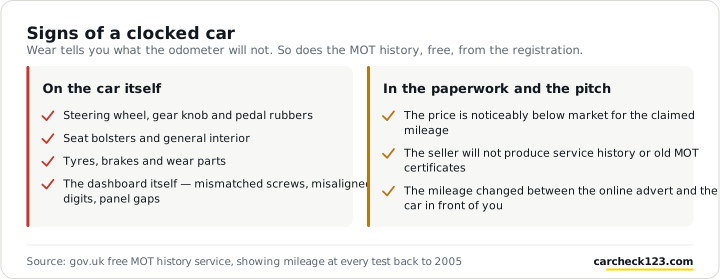
Signs of a clocked car — physical checks
Now look at the car itself. It often gives the game away.
- Steering wheels, gear knobs and pedal rubbers wear with use. A shiny, smooth wheel or worn-through pedal rubbers on a low-mileage car don't add up.
- A sagging driver's seat, worn bolsters and a scuffed, tired cabin all point to more miles than claimed.
- Tyres, brakes and other wear parts should look consistent with the mileage. Suspiciously new tyres can be innocent, but combined with other flags they're worth questioning.
- On older cars with mechanical dials, study the instrument cluster. Mismatched or loose screws, misaligned digits, or panel gaps suggest it's been apart. That mainly applies to analogue clocks. A modern digital odometer altered through the diagnostic port typically leaves no physical trace. So passing this check alone proves nothing.
There's one more check, and it needs a garage. Many cars hold a mileage figure in more than one control unit, not only in the instrument cluster. A rollback that rewrote the cluster and nothing else can leave the others disagreeing.
A garage with a diagnostic tool can read them for you. On a car I was serious about, I'd ask for it.
Don't read a clean scan as a clean bill of health, though. Tools that rewrite every module leave nothing behind to find.
Other red flags worth trusting your gut on
- The price sits noticeably below market for the claimed mileage. A genuine bargain is possible, but ask why it's cheap.
- The seller won't produce the service history or old MOT certificates, or gets defensive when you ask.
- The mileage changed between the online advert and the car in front of you, or between a first viewing and a second.
Any one of these might be nothing. Two or three together, and the free MOT check becomes non-negotiable before you go any further.
What to do if you think you've bought a clocked car
Don't panic, and don't bin anything. Gather your evidence first: a printout or screenshot of the MOT mileage history, the advert, and any messages with the seller. Then the service records, and a dated photo of the current reading.
Take it up with the seller. If that goes nowhere, report it to Trading Standards through the Citizens Advice consumer service, which passes reports to them. Suspect deliberate fraud? You can report it to Action Fraud as well.
What you can recover depends on whether you bought from a trader or privately. Check the specific guidance on Citizens Advice or Action Fraud, or get proper advice, before you decide your next move.
While you're checking history, look for the other nasty surprises. A write-off marker or outstanding finance can matter just as much as the mileage. See our guides to Cat N cars and Cat S cars for what those markers mean. There's more in our history check guides.
FAQs
Is mileage clocking illegal in the UK?
Selling a car on a false mileage is against the law. For traders it's a criminal offence under the Digital Markets, Competition and Consumers Act 2024, in force since 6 April 2025 and replacing the older 2008 regulations. It covers altering an odometer, or supplying, advertising or describing a vehicle with a false mileage. A trader can be caught even if they didn't know the reading was wrong, though the Act gives them a due-diligence defence. A private seller isn't caught by that criminal offence but can still be liable for misrepresentation.
How can I check if a car's mileage has been tampered with?
Start with the free MOT history. The mileage should rise consistently and never fall between tests. Cross-check it against the service book, and look at physical wear on the steering wheel, pedals and seats. A paid history check adds finance, write-off and mileage-record data where the free trail is thin.
How common are clocked cars in the UK?
Nobody really knows. No service audits every odometer in the country, so there's no official figure. What does get published comes from history-check firms. They count it on their own paying customers. One of those is carVertical's UK transparency index for 2025. It found a rolled-back odometer on 2.27% of the cars its customers paid to check. The average car in that group had 34,996 miles taken off. You'll see larger figures online. They come from the same kind of sample. Read any of them as a reason to run the free MOT check. Not as the odds on the car in front of you.
Can the MOT history check catch a clocked car?
Often, yes. It's the most reliable free check you have. It shows the recorded mileage at every MOT back to 2005, so any drop or implausible jump between tests stands out. It won't catch clocking done before a car's first MOT, or in the gaps between tests. That's why the service history and physical checks still matter.
What should I do if I think I've bought a clocked car?
Gather your evidence: MOT history, advert, seller messages, service records, a photo of the current reading. Take it up with the seller. If that fails, report it to Trading Standards via the Citizens Advice consumer service. Or to Action Fraud, if you suspect deliberate fraud.
Can electric cars and newer digital odometers be clocked?
Yes. Digital odometers are altered electronically through the car's diagnostic port, rather than by winding a dial. That often leaves no visible trace on the dashboard. The MOT and service-history cross-checks work just as well on newer and electric cars.