
What does a car history check show you?
Private sellers don't have to tell you any of this. A car can look immaculate and still be a repaired write-off. It can be tens of thousands of miles further round the clock than the dashboard says. It can even carry someone else's finance agreement.
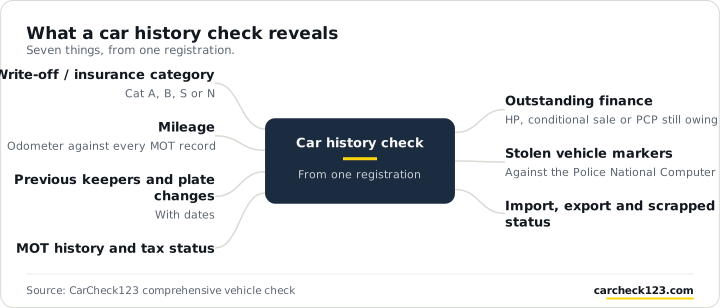
A history check finds those issues before they become your problem. A typical paid check (like our Comprehensive check) pulls several DVLA, insurance industry and police data sources together in one report. This is what you'll get.
Write-off / insurance category
If an insurer has ever declared the car a total loss, that gets recorded against its registration. It's the main thing a history check reveals, and it's covered in full below. That's also the fact most guides get wrong; ours included until this update.
Outstanding finance
Most used cars bought on finance are still being paid off when they change hands privately. A history check flags whether an active hire purchase, conditional sale or personal contract purchase agreement is registered against the car.
There's a wrinkle in UK law here. Say you buy a car in good faith from someone still paying it off under hire purchase or conditional sale. Say you had no reason to know about the agreement. In some circumstances you can then become its legal owner.
That's the "innocent purchaser" protection in Part III of the Hire Purchase Act 1964. The finance company then chases the seller, not you.
It isn't automatic, and the legal detail is nuanced. So don't rely on this as a fallback: run a finance check up front. If you do end up in a dispute, get it confirmed via gov.uk or Citizens Advice rather than assuming it applies.
Mileage
A check compares the mileage recorded at MOT tests, and sometimes other data points, against the current odometer reading. A drop or a gap that doesn't add up is the classic sign of clocking.
Stolen vehicle markers
Checks cross-reference the Police National Computer's stolen vehicle register.
Previous keepers and plate changes
The number of previous registered keepers and any number plate changes both feed into the picture.
Import, export and scrapped status
Imports, exports and scrapped status all show up here, including the country an imported car came from. What you see should match what the seller tells you. A car marked as scrapped but offered for sale is a serious red flag.
MOT history and tax status
Our free car check shows both from just the registration number. That's the MOT pass/fail history with the mileage recorded at each test, and the car's current road tax status. No hunting through two separate gov.uk services.
A history check report pulls all of that in alongside the paid-for checks above.
Part of our guide to car history checks.
Insurance write-off categories explained (Cat A, Cat B, Cat S, Cat N)
These categories matter. Plenty of older guides get it wrong; outdated versions of this one included. UK insurers have used four write-off categories since 1 October 2017: Cat A, Cat B, Cat S and Cat N.
You'll still see "Cat C" or "Cat D" in older articles, and even on an insurer's own paperwork. That's the previous system. It was retired and replaced, not renamed, under the Association of British Insurers' Code of Practice for the Categorisation of Motorised Vehicle Salvage.
- Cat A, scrap only. The car is so badly damaged that it must be crushed in its entirety. Even parts that look salvageable can't be sold on. It should never appear on the road again.
- Cat B, bodyshell scrapped, parts salvageable. The car itself can never return to the road and the bodyshell must be crushed. Individual parts can be stripped out and reused in other vehicles.
- Cat S, structural damage, repairable. "S" is for structural: damage to the chassis, frame or another structural part of the car. It can legally return to the road, but only once it's been professionally repaired and is safe to drive.
- Cat N, non-structural damage, repairable. "N" is for non-structural: damage that doesn't affect the frame or chassis, such as electrics, trim or body panels. It can still include safety-related items like brakes or steering. Like Cat S, it can legally return to the road once properly repaired.
The old Cat C and Cat D system worked differently. It sorted cars mainly by repair cost against value, rather than by what was actually damaged. Cat S and Cat N moved the focus onto whether the car's safety-critical structure was affected. That's a more useful question for a buyer.
There's one practical wrinkle. A car categorised Cat C or Cat D before October 2017 generally keeps that historic marker on record rather than being reclassified. So you may still see "Cat C" or "Cat D" on an older car's history. That's not an error, just its original category from before the system changed.
A Cat S or Cat N marker isn't automatically a reason to walk away. Plenty of these cars are repaired properly and driven for years afterwards. It's a reason to ask for the repair paperwork, get an independent inspection and allow for a lower resale value in your offer.
A Cat A or Cat B marker on a car for sale should never happen. If you see one, the car legally shouldn't be on the road at all.
What a history check can't tell you
Be realistic about the limits. A history check tells you what's on record. It can't tell you about mechanical wear that hasn't yet caused a fault.
It doesn't replace inspecting the car yourself or getting an independent engineer's report before you buy. And it can't catch fraud that nobody has recorded anywhere yet.
How to run a car history check
Start with the number plate. Enter the registration number on a check provider's site. Our Comprehensive check covers write-off category, outstanding finance, mileage, stolen markers, keeper history, import/export status, and MOT and tax data in one report. You can see exactly what's included in a sample Comprehensive check report before you buy.
FAQs
Is a Cat N car safe to buy?
It can be if it's been properly repaired. Cat N means non-structural damage, so the chassis and frame weren't affected. Ask for evidence of the repair, and get the car inspected before you commit.
Is a Cat S car worth buying?
Often, if the price is right. Cat S means the car had structural damage but has been repaired and passed the checks needed to return to the road legally. Expect a lower resale value than an equivalent car with no history, and get an independent inspection first.
Can a car history check tell me if a car has outstanding finance?
Yes, and it's one of the core checks. It flags whether a hire purchase, conditional sale or PCP agreement is still active against the vehicle.
Does a history check cover MOT history?
Most paid checks include it. You can also look it up yourself for free with our free car check, using just the registration number.
How much does a car history check cost?
Costs vary by provider and how much data the check includes. A Basic check typically costs a few pounds. A Comprehensive check like ours costs more. But it covers write-off category, finance, mileage, stolen markers and more in one report.