
What is car depreciation, and why does it happen?
Depreciation is the value a car loses over time. It starts the day a new car is first registered. By the time you drive it home, it's already worth less than you paid.
The drop slows down for as long as you own it. You can't escape it.
A used car is worth what a buyer will pay for it. That number falls as the car ages, racks up miles, and gets closer to needing expensive work. There's always a newer, lower-mileage version of the same thing for sale somewhere. Yours looks a little less appealing next to it every year.
This guide sits alongside our advice on the true cost of running a used car. You'll see what drives the rate of loss, which cars hold value best, and how it stacks up against everyday running costs.
Part of our guide to running a car.
How much do cars actually depreciate?
Search for "car depreciation" and the same claim comes up everywhere. Cars lose 35%, or 40%, or 60% of their value in the first year or three. Almost none of those figures include a source or date. Trace them back and you'll find figures copied from one site to another for years, sometimes over a decade.
We looked. There isn't an authoritative UK figure for average first-year depreciation backed by a dated, named primary source.
Take CAP HPI, one of the trade's main valuation data providers. It openly publishes its measurement approach: a "Year-on-Year % Deflation" calculation comparing a car's value at the same age and mileage across a 12-month period. You need a paid subscription to see the current numbers. Instead of repeating an unsourced figure, focus on what you can check today.
Auto Trader's Retail Price Index is a monthly price-trend index built from Auto Trader's own marketplace data. It's the latest full set with a date attached. Its June 2026 data put the average used EV at £24,662, up 1.6% on a year earlier. The fastest-moving group, 3-5-year-old EVs, rose 8.9% year-on-year to an average of £19,295.
The used car market as a whole averaged £17,194 in June 2026, up 0.8% year-on-year. That's a rolling monthly index, not a fixed "X% in year one" statistic. It'll move again next month. So any figure quoted here needs a date attached, and a re-check before you lean on it.
The SMMT (Society of Motor Manufacturers and Traders) reported separately on used battery-electric vehicles (BEVs). Transactions grew 67.0% year-on-year to 110,761 units in Q2 2026, the strongest quarterly growth since early 2024. That took BEVs to 5.5% of used-car sales. It's a market-growth figure rather than a value figure, but it shows how fast the used EV market is moving.
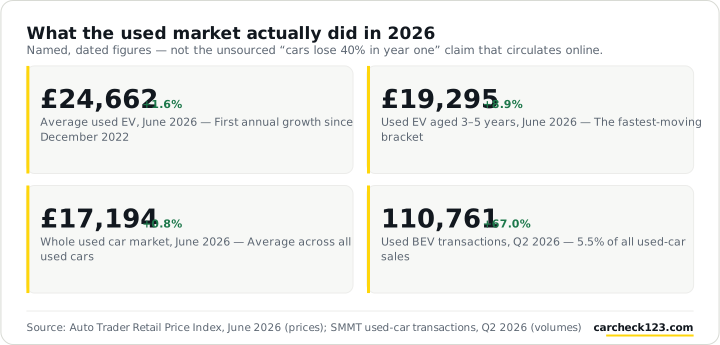
So depreciation isn't a fixed curve you can look up. It moves with the market, and it moves differently for different cars. The more useful question is what drives it.
What drives depreciation — the factors that matter
Think in factors rather than percentages. These are the things that push one car's value up or down faster than the market average.
Brand and model reputation
Cars with a strong reputation for reliability and low running costs hold value better. Used buyers seek them out and pay more for the reassurance. A poor reliability record works the other way. So does a model about to be replaced, because buyers can see a better version coming.
Mileage
More miles on the clock, less money. Higher mileage points to more wear and less life left before major components need replacing. Two otherwise identical cars of the same age can be worth noticeably different amounts if one has covered far more miles.
Condition and service history
A full stamped service history reassures buyers and supports a higher resale price, according to the RAC's consumer guidance on protecting a car's value. Evidence of regular maintenance does the same job. A thin history, visible damage or a poor MOT record pushes value down faster. That's because a buyer has to price in the risk and the cost of putting things right.
A car that's been written off and repaired (Category S or N) usually sells for noticeably less than the same car with a clean record. Our guide to insurance write-off categories explains what those markers mean for value and insurability.
Fuel type — EVs as a fast-moving special case
Electric cars have dropped faster than petrol or diesel equivalents for most of the last few years. New EV prices have been falling as more models arrive and government incentives shift, and that drags used values down with them. The picture is changing, though.
Auto Trader's Retail Price Index recorded used EV prices growing year-on-year for the first time since December 2022 (see above). SMMT's Q2 2026 data shows used BEV demand growing much faster than the wider used market. Treat any current EV depreciation figure as a snapshot rather than a rule. This is the fastest-moving corner of the used market.
Colour, spec and desirability
White, black, silver and grey sell to more people than bold colours do, so they hold value slightly better, according to RAC guidance. Popular trim levels and desirable options help too: a good infotainment system, alloy wheels or a tow bar on a family car. The effect is smaller than mileage, condition or brand reputation. It's a nudge, not a lever.
Which types of used car tend to hold their value best?
You'll find league tables of specific models all over the web. We're not running one. Every table we found rests on unsourced or proprietary sales data we can't verify ourselves. It's more honest to describe the general patterns:
- Brands with a long-standing reliability reputation, particularly certain Japanese manufacturers, tend to hold value well across their range, because used buyers trust them to keep running cheaply.
- Desirable SUVs and 4x4s have generally held value better than the market average in recent years, helped by sustained demand.
- Sought-after sports and performance models, especially from brands with limited production and strong badge appeal, can hold value unusually well when they're well maintained and low-mileage.
- Heading the other way: cars from brands with a weaker reliability reputation, and cars about to be replaced by a next-generation model, tend to depreciate faster than average.
These are patterns, not guarantees. One car's condition, mileage and history will move its value up or down inside whatever pattern its brand and model generally follow.
How to factor depreciation into your buying decision
The simplest way to reduce the hit from depreciation is to buy a car that's already past its fastest years of value loss. Once it's a couple of years old, the first owner has taken the sharpest drop. You still get plenty of useful life from it.
After that, the best way to avoid overpaying is to check the specific car in front of you, not just its type. Two cars of the same model and age, with similar mileage, can be worth different amounts. The difference comes down to condition, service history and any past insurance write-off.
Run a history check before you make a trip to view it. A check costs far less than a wasted afternoon. It also flags a Category S or N write-off, or a mismatched mileage record. Both hit resale value hard.
Condition is partly in your hands. Protect it once the car is yours. Keep up with servicing, fix small faults early, and decide whether a used-car warranty is worth paying for. All of that affects what the car's worth when you come to sell it.
Depreciation vs running costs — the full cost of ownership
Most people budget for fuel, tax, insurance and maintenance, then stop there. That's half the picture. The other half is the value the car loses while you own it. On many cars, that loss beats everything else combined.
Our free car check includes a running-costs estimator covering fuel, road tax and the MOT test fee. Insurance isn't included. It's a practical way to compare two cars you're weighing up.
But be clear about what it doesn't do. It estimates what a car costs to run day to day, not what it will lose in value. I wouldn't trust any tool, ours included, that claims to forecast a specific car's future resale value.
FAQs
How much does a car depreciate in the first year?
We couldn't find a UK dataset publishing a first-year retail depreciation figure with its method attached. The trade valuation books that might hold one sit behind subscriptions we can't access. The closest public figure comes from Cox Automotive. It reported cars under 12 months old selling for an average of 65% of their original cost when new over the first three months of 2026. Cox's own charts label that a trade sale value: the wholesale price a car makes at auction, not a forecourt asking price. It doesn't come with a sample size. Every "X% in year one" statistic we found on consumer sites was unsourced. What we can verify is that depreciation runs fastest early in a car's life and slows as it ages. The rate varies a lot by brand, model and mileage, and for EVs by the fast-moving state of that specific market.
Which cars hold their value best in the UK?
As a general pattern: brands with a strong reliability reputation, popular SUVs and 4x4s, and desirable performance models hold value better than average. Condition, mileage and service history matter just as much as the model itself. A well-maintained ordinary car can beat a neglected desirable one.
Do electric cars depreciate faster than petrol or diesel cars?
They've done for most of the last few years, but the picture is shifting. Auto Trader's Retail Price Index, in its June 2026 data, recorded used EV prices rising year-on-year for the first time since December 2022. SMMT reports used EV sales volumes growing much faster than the wider used market. Treat any depreciation comparison between fuel types as a snapshot rather than a permanent rule.
Does mileage affect how much a car depreciates?
Yes. Higher mileage generally means lower resale value. That's because it points to more wear and less remaining life before major work is needed, according to RAC guidance. A full service history that backs up a genuinely low mileage helps protect value.
Is it better to buy a used car once the steepest depreciation has already happened?
Often, yes. A car that's a couple of years old has typically already absorbed the fastest part of its value loss. So you get a lot of the car's useful life for a lower price than buying new.
How can I check how much a specific used car has depreciated, or is likely to?
No tool reliably predicts a specific car's future value. The practical move is to compare current asking prices for similar cars. Then run a history check to confirm that the car's mileage, condition and past record are what the seller claims. All of that affects what it's worth today.